AI
Agentic
Agentic Strategy

What I have seen, speaking with technical builders and seasoned business folk alike, is this: change is coming at us from both ends. Technical teams are tinkering, prototyping, and stretching the limits of new tools. The business teams – hungry for efficiency but bogged down by legacy rules and missing access – feel the friction. If this sounds familiar, you already know why it matters.
Let’s break it down. The technical crowd is already adopting tools like Cursor, Claude Code, and Replit. They’re building faster, stress-testing ideas, and throwing together “MVPs” (minimum viable products – the first workable version of an idea you can quickly trial).
“They’ll use these tools to build faster, throw together MVPs, stress-test assumptions, and burn through the most tokens.”
This is how innovation always starts – those closest to the work adopt the new. But step into a business meeting, and you’ll witness a different story. Technical innovators are blocked by outdated processes, and would-be adopters bump into access walls or puzzled colleagues. It’s a frustration with teeth.
“That will shape early 2026—people who know what’s possible being blocked by the old system at work.”
The result? Agents (AI tools) aren’t simply helping draft reports or tidy data; they are running 24/7, crunching through mountains of information, sparking fresh ideas by dawn. They are, in a word, always on.
But here’s where management changes for good: you’re not supervising a handful of agents – you might have ten, a hundred, or even more. The paradox? Building agents is technical, but managing them is something else entirely.
So, what will make or break the new manager in an agentic world? I see two core capabilities, and both will stretch a few muscles most of us haven’t used in a while.
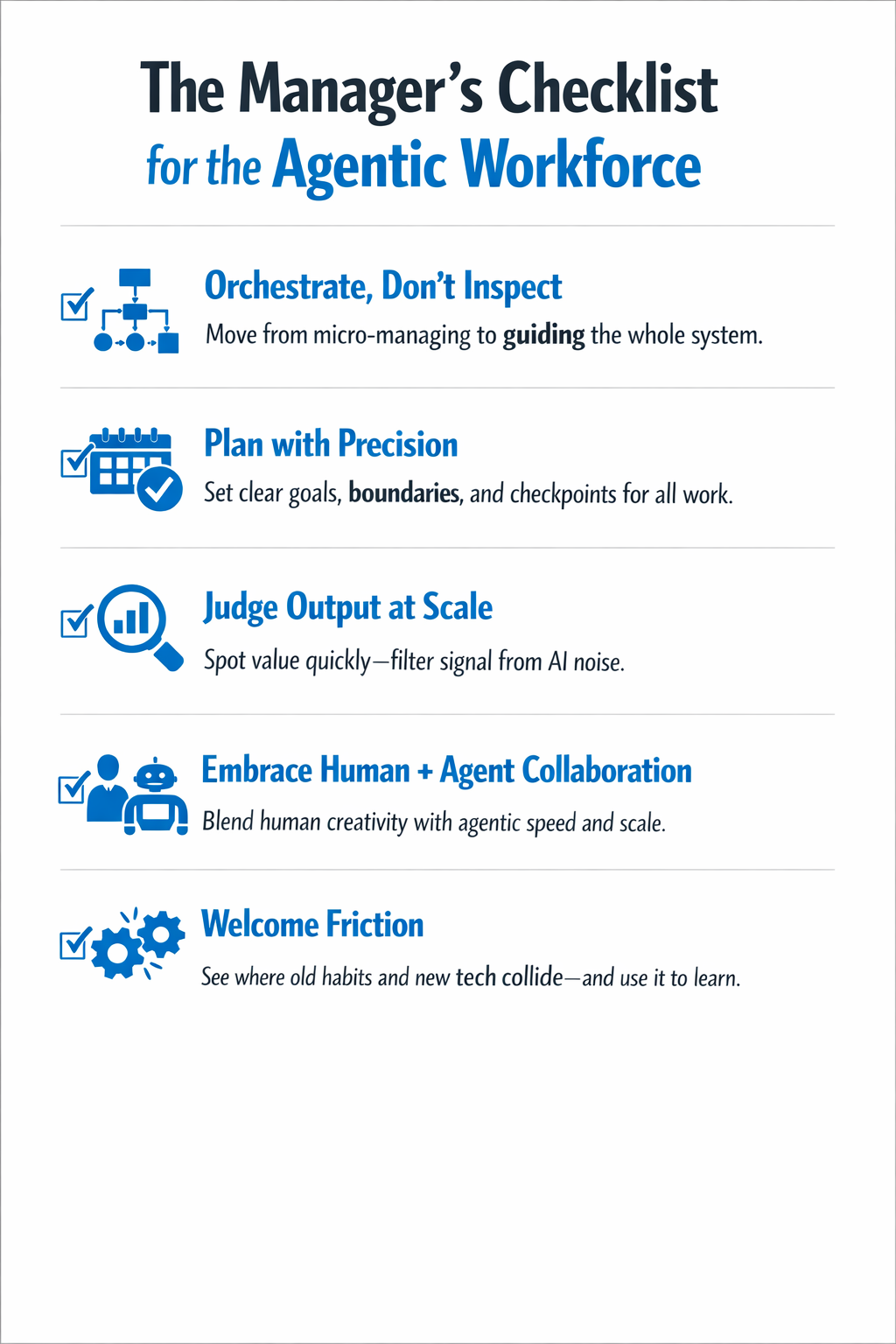
First, you have to know what a robust plan looks like. This means being specific about goals, knowing your constraints, and setting up checkpoints along the way. Gone are the days of “fake it till you make it.” AI agents expose weak planning in an instant.
Second, and just as crucial, is your ability to recognise output quality at scale. Can you sift through AI-generated noise, spot the treasure, and ignore the slop? Because the slop's coming – and at a scale far beyond anything we have seen before.
The stakes aren't trivial. Those who learn to manage agentic teams – who adapt, iterate, and orchestrate instead of overseeing every detail – will move faster, deliver cheaper, and pivot when required. Those who fail? They’ll ship brittle systems that break under pressure, or worse still, won’t ship at all.
It’s not just theory. As Brian Solis puts it: “The leader’s new role is to orchestrate a collaborative environment where human expertise and agentic AI work in concert to deliver outcomes greater than either could alone.” (Forbes, Agentic Workforce Management)
Deloitte backs this up: “Agentic AI allows organizations to shift resources dynamically, adapt roles in real time, and orchestrate work at a pace and scale that traditional management cannot match.” (Deloitte, Agentic AI transforms workforce planning)
The message is clear. If you do not shift your focus from daily inspection to orchestrating and enabling – you will struggle, and your team will know. Old guardrails won’t hold.
Start by recognising that your core job is changing. The “shepherd’s job now isn’t watching each sheep – it’s shaping the field, setting the fences, and knowing whether the flock is heading somewhere brilliant or towards a cliff.”
If you’re unsure where to turn, I’d recommend these next steps:
And remember: the future isn’t about counting sheep. It’s about reshaping the field. The world of work is changing whether you embrace it or not. Best make sure your team is heading in the right direction.